
RECHERCHE
Combattre l’hésitation vaccinale chez les adolescentes et les adolescents

Chaque année, la vaccination sauve des millions de vies. Cependant, son efficacité
dépend en grande partie de son acceptation par la population. Dans un article publié
le 10 Septembre 2025 dans Nature Human Behaviour, Noémon Baudouin et ses
collègues scientifiques à l’ENS-PSL, se sont penché·es sur une période charnière dans le développement des attitudes envers les vaccins : l’adolescence.
Lire l'article
Comment notre cerveau décrypte la parole : une hiérarchie profonde de rythmes neuronaux

Depuis de nombreuses années, les neuroscientifiques essaient de décrypter la façon dont le cerveau humain parvient à comprendre la parole dans des conditions acoustiques complexes ou lorsqu’elle est déformée - qu'il s'agisse d'environnements bruyants, d'accents marqués ou de discours rapides. Une avancée publiée dans Nature Computational Science le 26 septembre 2025, par des scientifiques de l’Institut reConnect et de l’ENS-PSL, offre une explication avec des perspectives pour la réhabilitation des troubles de la parole et le développement d'interfaces cerveau-machine.
Lire l'article
Les rythmes cardiaques, respiratoires et gastriques modulent indépendamment l'excitabilité corticospinale motrice chez l'être humain
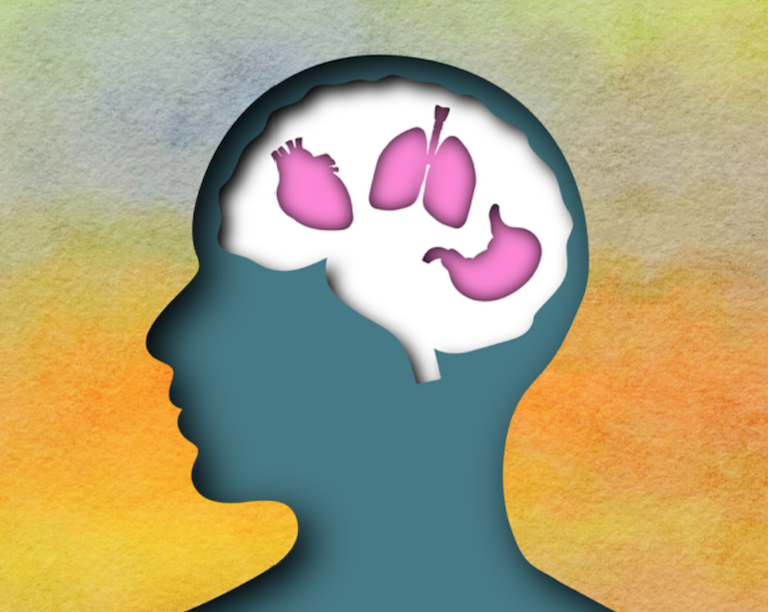
Le cerveau perçoit les signaux provenant de l'intérieur du corps parmi lesquels les rythmes du cœur, des poumons et de l'estomac. On sait désormais clairement que la manière dont il perçoit ces rythmes a un impact considérable sur la cognition et qu'il existe un couplage à grande échelle entre les rythmes du cerveau et ceux du corps. La plupart des théories ont, jusque-là, porté sur l'ensemble des rythmes corporels.
Dans une étude publiée récemment dans PLOS Biology, Tahnée Engelen, Teresa Schumann, Alexander Sack et Catherine Tallon-Baudry, membres du Laboratoire de Neurosciences Cognitives et Computationnelles (LNC2), ont cherché à déterminer s'il pouvait exister des influences indépendantes des différents rythmes viscéraux (du cœur, des poumons et de l'estomac).
Lire l'article
« Il faut changer notre regard sur l’océan »

Les activités humaines impactent l’océan, pourtant dernier espace non colonisé par l’humain. Comment envisager notre relation à ce milieu aussi familier que méconnu ? Pour le philosophe et directeur de l'Institut Jean Nicod, Roberto Casati, l’altérité radicale de l’océan exige de forger de nouveaux concepts pour mieux le sauvegarder.
Un article extrait de la revue Carnets de science n° 18 publié par le CNRS.
Lire l'article
PRIX
ISCA Fellows 2025 - Alejandrina Cristia et Emmanuel Dupoux

Alejandrina Cristia et Emmanuel Dupoux viennent d'être élu·es ISCA Fellows 2025. Félicitations aux deux scientifiques dont les travaux sur le langage sont ainsi salués !
Lire l'article
Charlotte Jacquemot, lauréate du Prix de la délégation aux droits des femmes du Sénat
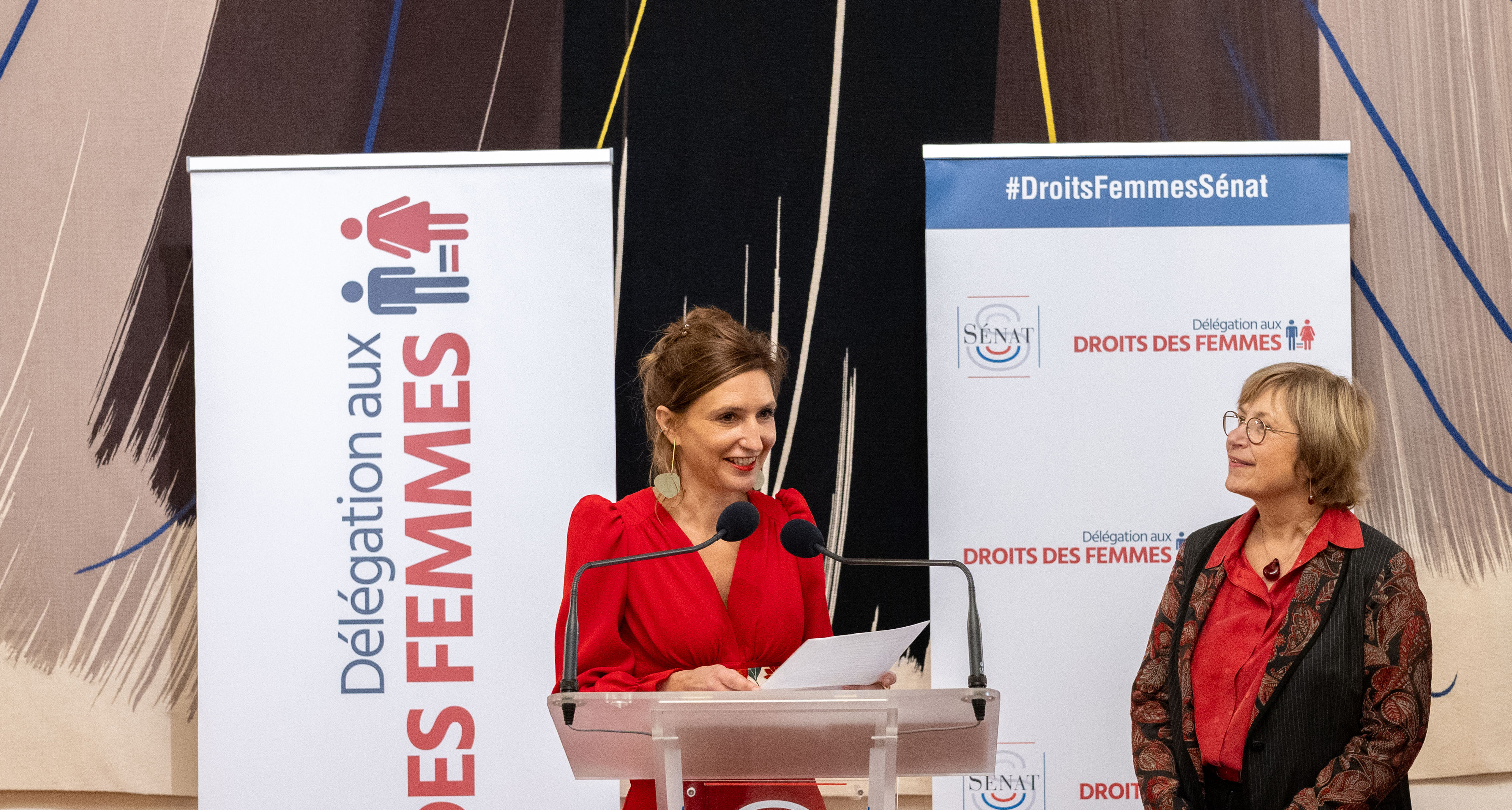
Pour cette septième édition, la délégation aux droits des femmes du Sénat a nommé, parmi les lauréat·es, Charlotte Jacquemot, chercheuse au CNRS, directrice du département d’études cognitives et référente égalité femmes-hommes de l'ENS, pour son engagement en faveur de l’égalité femmes-hommes et ses contributions pour lutter contre les stéréotypes et biais genrés dans l’orientation des filles vers les carrières scientifiques.
Lire l'article
FINANCEMENT
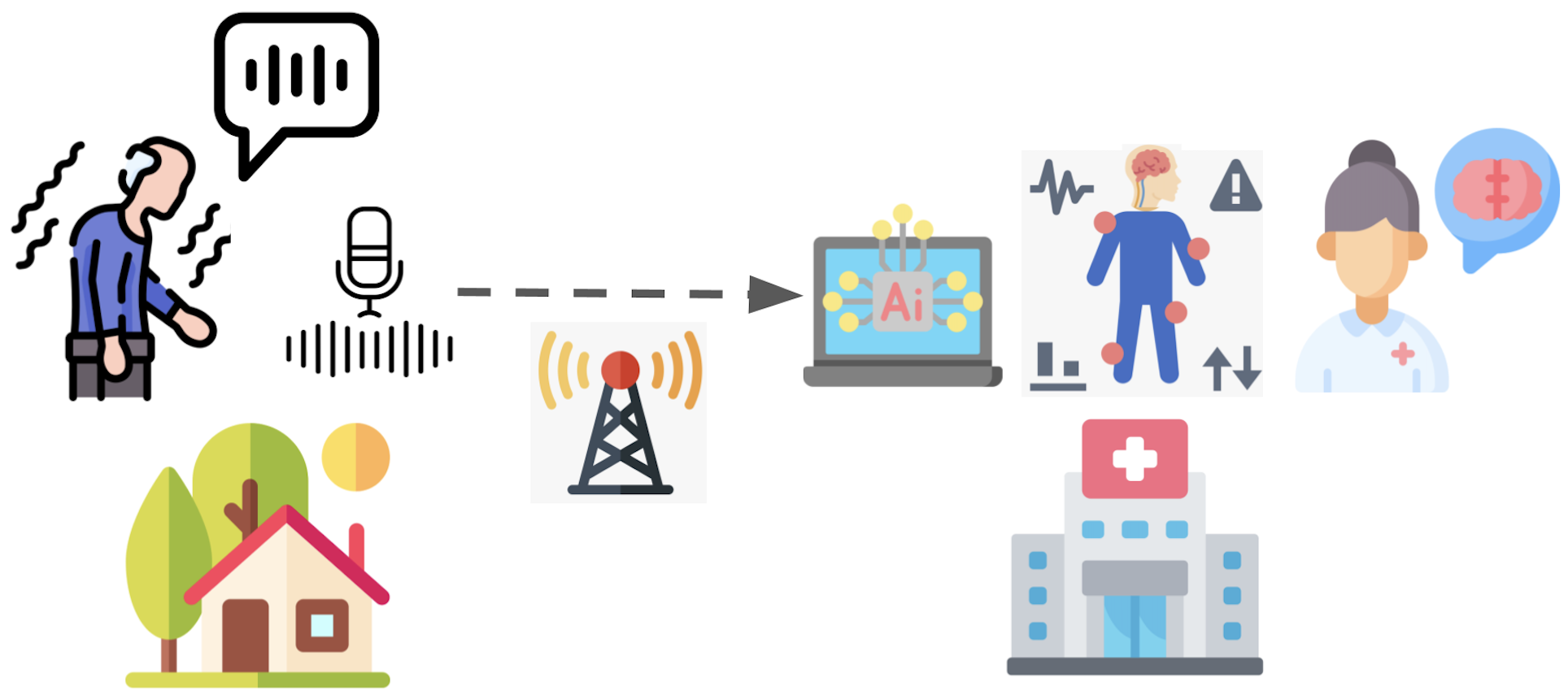
Une application d’IA pour suivre, à distance, les patient·es de la maladie de Parkinson
Robin Louiset, post-doctorant au laboratoire de NeuroPsychologie Interventionnelle, a reçu un financement de France Parkinson pour soutenir le projet VoxParkinIA qui porte sur le développement d’une application d’Intelligence Artificielle de reconnaissance vocale pour le suivi à distance des troubles de la mémoire et de la concentration dans la maladie de Parkinson.
Lire l'article
DANS LES MÉDIAS
Le cerveau réagit mieux à l'imprévu en ayant un comportement un peu hasardeux
L'activité cérébrale qui permet de prendre des décisions dans des situations imprévues est en partie aléatoire. Cela peut entraîner des comportements partiellement irrationnels dans certaines situations, mais permet une bien meilleure adaptabilité. La Science au labo, avec Valentin Wyart, chercheur au LNC2.
L’IA et ChatGPT nous « atrophient-ils » le cerveau ?
L’IA générative s’impose progressivement dans les entreprises. Elle change le quotidien au travail, challenge les stratégies des organisations et questionne la place de la technologie dans nos vies.
Charlotte Jacquemot était l'invitée des Échos de l'IA, podcast des Échos.
À la découverte de la nature de la connaissance

La recherche révèle comment les gens traitent l'information, comment ils acquièrent - et parfois rejettent - les connaissances, et les compare aux capacités des systèmes d'intelligence artificielle.
Olivier Morin, chercheur à l'Institut Jean Nicod, apporte des explications.
Lire l'article (en anglais)

« Histoire naturelle de la fiction », d’Edgar Dubourg : la chronique « essai » de Roger-Pol Droit
Le Monde des Livres - Le jeune chercheur de l'Institut Jean Nicod livre un remarquable essai de psychologie évolutive publié le 03 septembre aux éditions HumenSciences.
Lire la chronique
La Philosophie de l'Océan
L’océan, la mer sont pensés par les philosophes. Roberto Casati est l'auteur de « Philosophie de l’Océan ». Il était l'invité des Chroniques Littorales sur France Inter.
QUELQUES PUBLICATIONS RÉCENTES
d’Ascoli, S., Bel, C., Rapin, J. et al. (2025)Towards decoding individual words from non-invasive brain recordings. Nat Commun 16, 10521. doi:10.1038/s41467-025-65499-0
Résumé :
While deep learning has enabled the decoding of language from intracranial brain recordings, achieving this with non-invasive recordings remains an open challenge. We introduce a deep learning pipeline to decode individual words from electro- (EEG) and magneto-encephalography (MEG) signals. We evaluate our approach on seven public datasets and two datasets which we collect ourselves, amounting to a total of 723 participants reading or listening to five million words in three languages. Our model outperforms existing methods consistently across participants, devices, languages, and tasks, and can decode words absent from the training set. Our analyses highlight the importance of the recording device and experimental protocol: MEG and reading are easier to decode than EEG and listening, and decoding performance consistently increases with the amount of data used for training and for averaging during testing. Overall, our findings delineate the path and remaining challenges towards building non-invasive brain decoders for natural language
Beuchot, T., Nettle, D. & Chevallier, C. (2025). Behavioural public policy should take the psychology of poverty into account. Commun Psychol.doi:10.1038/s44271-025-00366-8
Résumé :
Psychological variability is central to understanding behavioural interventions. Over the past 15 years, many behaviourally informed public policies have proven effective; however, they often yield highly heterogeneous outcomes, and the reasons for this variability remain unclear. We posit that these mixed results are due to researchers and policy makers designing interventions around behavioural strategies that perform well on average, overlooking how individuals differ in their responses. We review discoveries from the psychology of poverty to show how variations in traits such as conformism, present orientation, personal agency, and social vigilance correspond with levels of resource availability. We then demonstrate how these psychological differences systematically shape individual reactions to behavioural policy tools such as default options, self-regulation devices, information campaigns, social-belonging interventions, and social norms. Ultimately, we argue that an applied behavioural science of poverty is essential for crafting interventions that are both effective and equitable.
M. Boon-Falleur, E. Huillery, & C. Chevallier (2025). Waiting time during admission procedures increases social inequalities in higher education, Proc. Natl. Acad. Sci. U.S.A. 122 (47) e2426604122, doi:10.1073/pnas.2426604122
Résumé :
Many domains in life require people to wait to access better outcomes, such as waiting in line to access prized tickets for a show, waiting to obtain a job offer from a selective firm, or being waitlisted for a prestigious university. Although waiting might be perceived as a fair mechanism to allocate resources, it may have unintended consequences on social inequalities as individuals from lower socioeconomic backgrounds (SES) may be less likely to wait. In this study, we investigate socioeconomic differences in waiting behavior during the higher education admission process in France. To do so, we leveraged a unique national database that recorded the admission behavior of every high schooler in France over a period of three years. During the admissions process, students faced a trade-off: They could either accept an immediate offer from a university or wait in the hope of receiving a preferred offer later. Results collected among 274,316 students reveal that low-SES students were significantly less likely to wait for preferred offers, even when controlling for objective costs and benefits of waiting. This led low-SES students to ultimately enroll in programs they liked less and that were less prestigious. These results highlight how admission procedures generating uncertainty and requiring students to wait may inadvertently exacerbate educational inequalities. Such systems, while efficient, can end up favoring students who wait more. This research contributes to current discussions on admission procedure fairness by illustrating that seemingly neutral algorithms can in fact deepen social inequalities if their design rewards patience.
Casati R., Portier A., Astruc Delor C., Baird-Zars, Cerino C., Julian Esteban-Cantillo O., Eveillard D., Malatesta S., Schmidt di Friedberg M. (2026). Sea level rise: A plea for taking the viewpoint of the ocean, Marine Policy, Volume 185,106972, ISSN 0308-597X. doi:10.1016/j.marpol.2025.106972.
Résume :
Sea levels have risen an average of 1.5 mm/y over the twentieth century and are predicted to further rise by 2100, in particular under the SSP5–8.5 scenario. Although the consequences of rising sea levels for coastal areas have been observed, predicted, and discussed in the literature, the concerns predominantly addressed are understandably issued from a land-centric perspective. Little consideration has been devoted to systematically studying the consequences of submersion for the sea itself. We suggest that the viewpoint of the ocean should be included in future research and policy-making, inviting the coordination of three main research areas: 1. What parts of land will be submerged? 2. What human infrastructure and non-human features will be reclaimed by the sea? 3. What kind of effects will the submerged infrastructure and features have on the marine environment and its inhabitants? We detail some models and challenges, and advocate for an integrated study of the Marine Impacts of Sea Level Rise (MISR).
Fraisse, N., Bachoud-Levi, A.-C. and Jacquemot, C. (2025). Pragmatics Assessment in Adults: Adaptation and Validation of the Assessment of Pragmatic Abilities and Cognitive Substrates (apacs) in French. Revue de neuropsychologie, 17(3), 163-170. doi:10.1684/nrp.2025.0827.
Résumé :
Pragmatic skills refer to an individual’s ability to appropriately interpret non-explicit information in a given context. These skills are crucial for daily life, and deficits can arise in the context of various neurological or psychiatric conditions. However, few assessment tools are available in French for the adult population.
The aim of this study was to adapt the assessment of pragmatic abilities and cognitive substrates (APACS)—a test originally developed in Italian and validated for use with both healthy adult participants and individuals with neurological or psychiatric disorders—into French. This test is notable for its comprehensive evaluation of multiple aspects of pragmatic understanding, including humor, idioms, proverbs, implicit inferences, and metaphors, using a combination of open-ended questions and multiple-choice closed questions.
The validation of the French-adapted APACS was carried out with 40 healthy adult participants. Psychometric analyses indicate that the French adaptation is valid (construct validity) and reliable (internal consistency and inter-rater reliability). Furthermore, the scores correlated with those obtained from the Italian version (convergent validity). The French APACS therefore offers a reliable tool for the clinical assessment of pragmatic abilities in French-speaking adults.
Nettle D, Chevallier C, Pickett KE, Johnson MT, Johnson EA, Bateson M. (2025). Why is income volatility associated with poor health? Longitudinal evidence from the UK and France. SSM Popul Health. 32:101869. doi: 10.1016/j.ssmph.2025.101869. PMID: 41142650; PMCID: PMC12547960.
Résumé :
There is some evidence that income volatility (fluctuations in income over time) negatively affects mental and physical health, independently of the level of income. Evidence to date has examined fluctuations from year to year or from day to day, whereas a more relevant timescale might be month to month. Here, we use data from the Changing Cost of Living Study, a longitudinal panel from the UK and France with monthly data (n = 484). We examine the association between month-to-month income volatility and two outcomes, self-rated general health and anxiety-depression (a composite measure derived from GAD-7 and PHQ-8 scores). Higher volatility was associated with worse health on both measures, with volatility accounting for similar amounts of variation as the level of income. Some association between income volatility and health is to be expected as a consequence of the concavity of the income-health relationship: because of concavity, a downward fluctuation damages health more than the equivalent upward fluctuation improves it. We show that the observed associations are 3 and 4 times too strong to be explained by this mechanism alone. We suggest that volatility, because it introduces uncertainty and stress, has substantial direct health effects. This claim is important for public policy: it means that policies and institutions that smooth people's income streams can have beneficial health effects even if they don't raise anyone's income.
AGENDA
Au DEC
Retrouvez les événements organisés par le DEC dans l'agenda du département.
Les séminaires et les conférences sont accessibles sur la chaîne youtube du département, le site des Savoirs de l'ENS, la chaîne youtube de l'école.
À l'ENS
Petites exploratrices, petits explorateurs de la connaissance
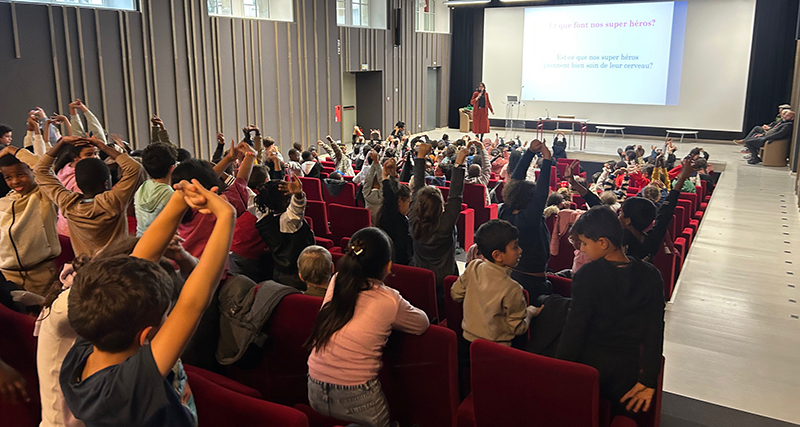 L’ENS lance ses conférences pour les enfants !
Qu'est-ce qu'une molécule ? Hercule est-il un super héros ? Comment faire un arc-en-ciel avec le moins de couleurs possible ? Quelle est la température du froid ultime ? Mais que cache la forêt ? Pourquoi se coucher tôt est bon pour mon cerveau ? Fabriquer un océan, c'est possible ?
Parce qu’il n’y a pas d’âge pour s’intéresser aux sciences et à comment elles permettent de mieux comprendre et habiter notre monde, et parce que les enfants ont toujours mille questions en tête, l'ENS lance son programme de conférences pour les enfants à partir de 6 ans.
Programme détaillé
Retrouvez les événements de l'ENS sur https://www.ens.psl.eu.