
RECHERCHE
Impact de la perte du paysage sur les populations humaines

Emma Wolton est doctorante en géographie, également rattachée à l'Institut Jean Nicod.
Dans le cadre de sa thèse sur l'impact de la perte du paysage sur les populations humaines, la jeune femme s'est rendue à Tucson, dans le sud de l'Arizona aux États-Unis en 2023 et en 2024 pour mener un travail de terrain sur les changements paysagers et environnementaux vécus par la peuple Tohono O’odham.
A quelques mois de soutenir sa thèse, elle rend publiques les données récoltées durant cette enquête de terrain. Une StoryMap créée avec l'aide de son collègue, Chris Lukinbeal.
Lire l'article
Existe-t-il des mélodies naturelles ?
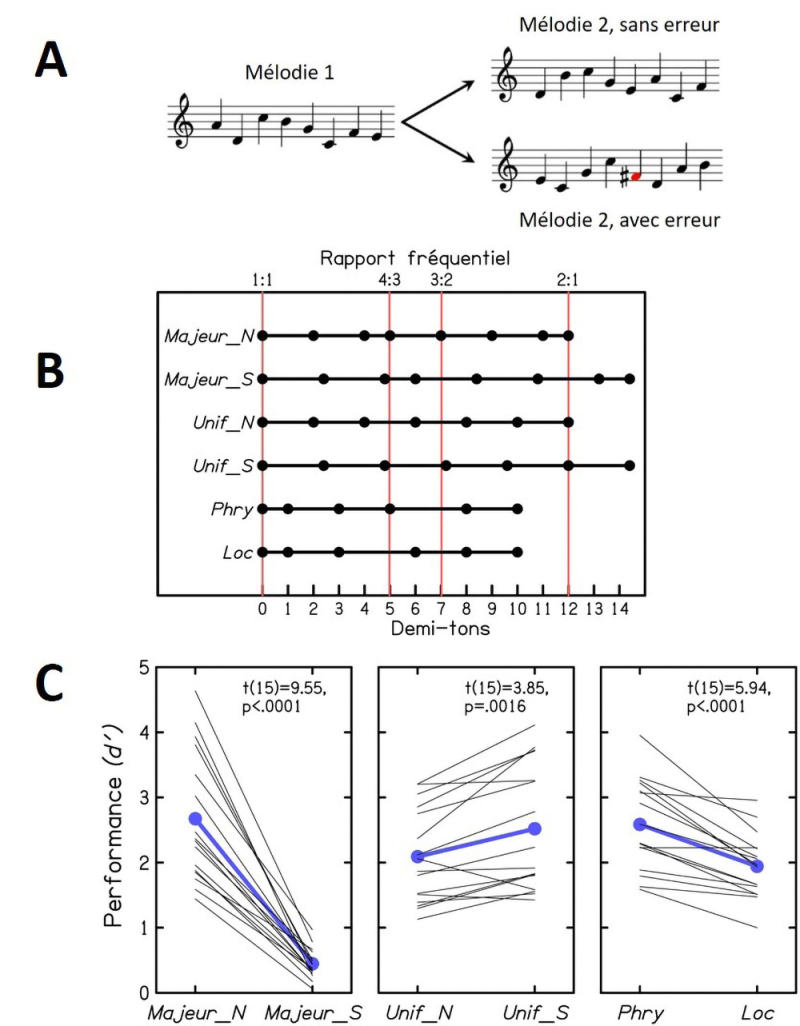
De nombreuses cultures musicales choisissent des échelles établissant des rapports de fréquence simples (2:1, 3:2, 4:3) entre les notes. On croit généralement que ce choix s'explique seulement par l'intention de maximiser la consonance sensorielle de notes simultanées. Ce n’est pourtant pas le cas, selon un article publié dans Current Biology. Cette étude menée par Laurent Demany et Catherine Semal de l'Université de Bordeaux en collaboration avec Daniel Pressnitzer, chercheur au Laboratoire des Systèmes Perceptifs à l'ENS, montre en effet que les rapports de fréquence simples rendent de façon naturelle la perception des mélodies plus précise.
Lire l'article
Écouter l’eau pour comprendre la relation des habitants et des habitantes à leur environnement

Le projet de recherche ALEAU porté par Pauline Guinard, géographe à l’ENS, a reçu un financement de l’Agence Nationale de la Recherche (ANR) à la fin de l’année dernière.
Ce projet qui a démarré en décembre 2024, vise à étudier la relation des individus et des groupes aux paysages sonores ordinaires associés à la présence et/ou à la réapparition de l’eau dans des milieux urbains, périurbains et ruraux d’Ile-de-France en évaluant la capacité humaine à traiter auditivement et émotionnellement l'information acoustique véhiculée par cette ressource. Un projet qui se situe au croisement de la géographie humaine et environnementale, de l’éco-acoustique et pour la première fois des sciences cognitives.
ALEAU est né d’une rencontre entre Pauline Guinard et Christian Lorenzi, chercheur en sciences cognitives au Laboratoire des Systèmes Perceptifs et partenaire du projet ALEAU, rencontre qu’ils évoquent dans cet entretien.
Lire l'article
DANS LES MÉDIAS
Chaire Vulca, transdisciplinarité au service des patients

La chaire Vulca (« Vulnérabilités et capabilités, vivre avec une maladie génétique ») est un projet novateur pour les maladies génétiques rares. Cette initiative unique allie médecine, design, sciences exactes et sciences humaines et sociales pour répondre aux besoins spécifiques des personnes vivant avec une maladie génétique rare. Les trois coordinatrices - Sophie Larger (ENSAD), Charlotte Jacquemot (ENS) et Lisa Friedlander (APHP) prônent un accompagnement permettant aux individus d’accroître leurs compétences de faire des choix réels et significatifs. Elles proposent également un modèle transdisciplinaire transposable à d’autres problématiques de santé.
Lire l'article dans La Revue du Praticien
Ressenti et discriminations de genre : ce qui freine la féminisation des filières scientifiques
Le ressenti est une notion de plus en plus présente dans nos vies, utilisée notamment par les médias, les sondeurs mais aussi par les acteurs publics et académiques. Surtout, elle prend une place grandissante dans la prise de décision des électeurs et des responsables politiques. Dans le cadre du cycle de travaux initié par la Fondation Jaurès sur le sujet, et à l’occasion de la Journée internationale des femmes et des filles de science, Charlotte Jacquemot décrypte les ressentis qui freinent la féminisation des filières et des carrières scientifiques.
Lire la note publiée sur le site de la Fondation Jaurès
« Severance » : le processus de réintégration décrypté par les neurosciences

La série de science-fiction Severance dépeint un monde dystopique où une opération chirurgicale permet de séparer ses souvenirs au travail de ses souvenirs liés à sa vie privée. La saison 2, qui cartonne et dont l’épisode final sera diffusé le 21 mars 2025, met en avant une procédure qui permettrait de réintégrer ces deux pans de la personnalité. Qu’en disent les neurosciences ?
Par Laetitia Grabot, chercheuse postdoctorale au Laboratoire des Systèmes Perceptifs, pour The Conversation.
Lire l'article
Comment les bébés apprennent leur langue maternelle ?
Mais comment font-ils pour apprendre si facilement et si rapidement leur langue maternelle ? La tâche des bébés relève de l’exploit puisqu’au départ ils entendent des sons dépourvus de sens. Alors comment s’y prennent-ils ? Sharon Peperkamp apporte des réponses dans l’épisode 9 de la série Les super pouvoirs des bébés sur France Inter.
Sharon Peperkamp est directrice de recherche au CNRS au Laboratoire de Sciences Cognitives et Psycholinguistiques. Ses recherches portent sur l’apprentissage de la langue maternelle chez les bébés lors de leur première année d’existence.
Une nouvelle vague interdisciplinaire prête à déferler
 Pour mieux comprendre et protéger l’océan, une nouvelle génération de scientifiques mise sur l’interdisciplinarité. Littérature, biologie, philosophie… trois jeunes chercheurs et chercheuses croisent les savoirs et bousculent les cadres établis pour penser autrement la science des océans. Une approche audacieuse et semée d’embûches qui pourrait bien redéfinir la façon dont nous explorons et préservons le monde marin.
Parmi ces doctorants et doctorantes, Evan et Pauline travaillent au sein du « Navigation groupe » créé et coordonné par le philosophe de l’océan Roberto Casati, à l'Institut Jean Nicod.
Lire l'article
Sons de la nature : quand les chants d’oiseaux nous donnent des ailes
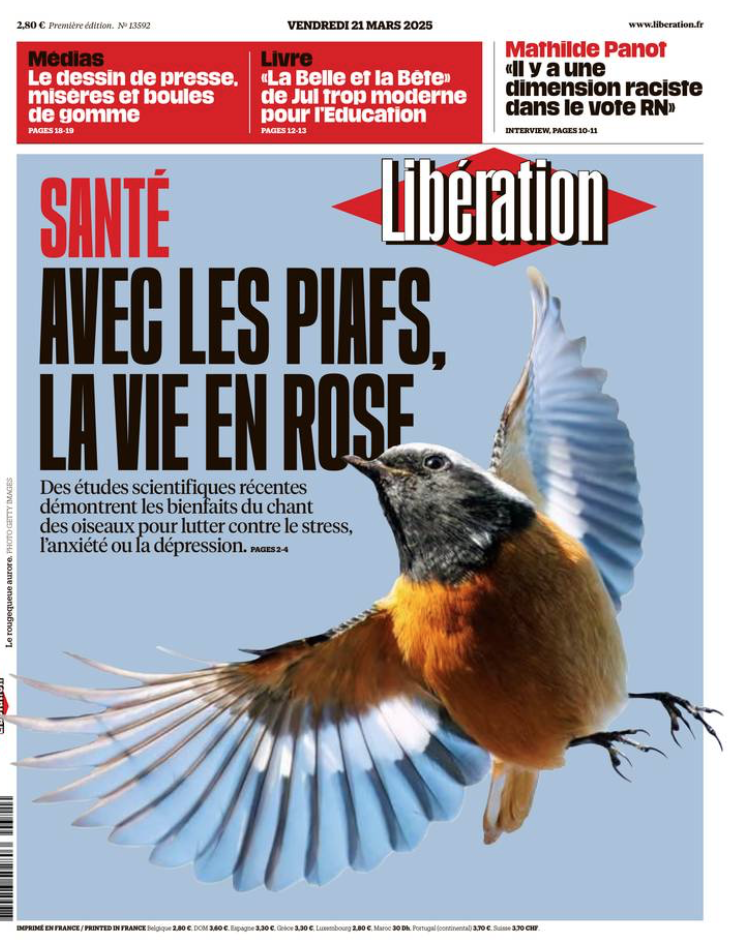
Sons de la nature : quand les chants d’oiseaux nous donnent des ailes. "Nous avons pu constater des réactions émotionnelles positives de la part des personnes qui ont pu réécouter des sons de la nature grâce à des prothèses auditives" explique Christian Lorenzi dans un numéro de Libération dédié aux sons de la nature.
Lire l'article
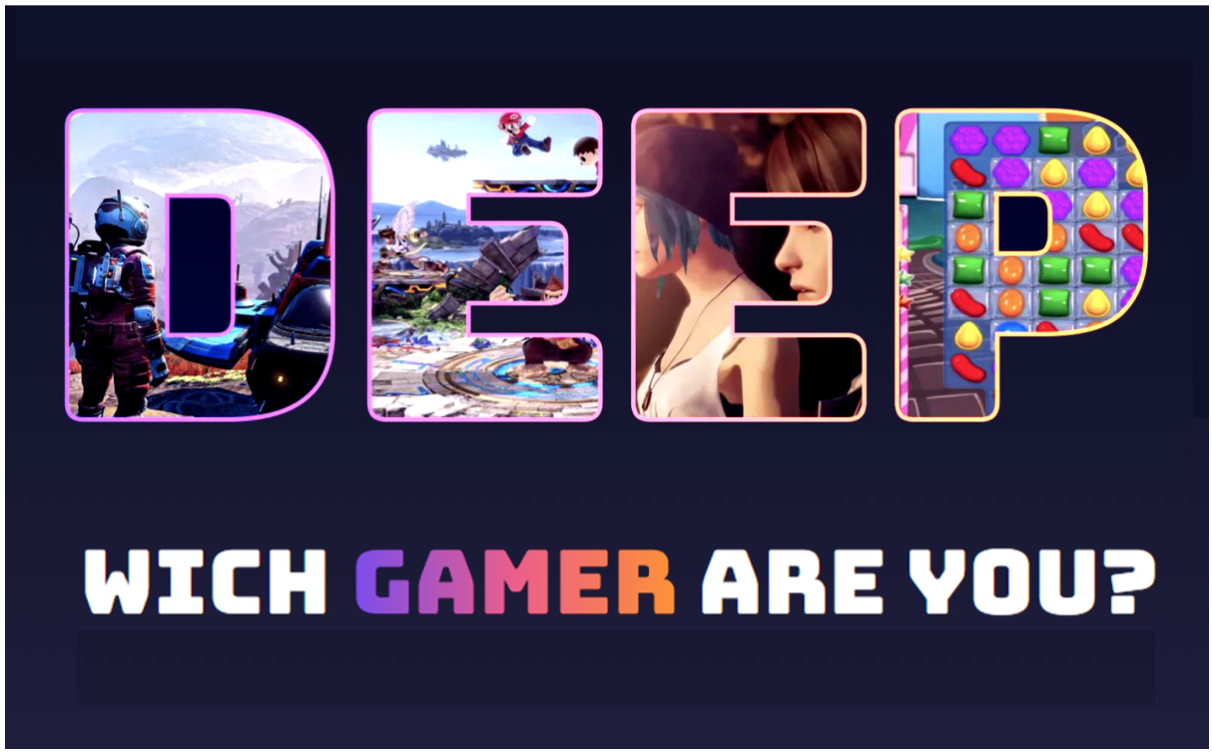
Le CNRS met en ligne un test de personnalité qui dévoile votre profil de gamer : le profil DEEP
Et si votre manière de jouer révélait une part de votre personnalité ? C'est le pari de Valérian chambon et d'Edgar Dubourg de l'Institut Jean Nicod, qui ont conçu un modèle baptisé « DEEP » pour classer les joueurs en fonction de leur rapport à l'exploration et à la performance.
Lire l'article publié sur le site JVTech
Pour en savoir plus sur DEEP :
- Dubourg, E. & Chambon, V. (2025). DEEP: A model of gaming preferences informed by the hierarchical nature of goal-oriented cognition. Entertainment Computing, 53(100930). doi:10.1016/j.entcom.2025.100930
- Lire l'article DEEP - Quel joueur ou quelle joueuse de jeu vidéo êtes-vous ?
QUELQUES PUBLICATIONS RÉCENTES
Apoux, F., Laurent, S., Gallego, S., Lelic, D. , Moore, B. & Lorenzi, C. (2025). Effects of Hearing Loss and Hearing Aids on the Perception of Natural Sounds and Soundscapes: A Survey of Hearing Care Professional Opinions. American Journal of Audiology. 1-15. doi:10.1044/2025_AJA-24-00171
Résumé :
Purpose:
The goal was to gain insight into the effects of hearing loss and hearing aids (HAs) on the perception of “natural sounds” and their importance in daily life by documenting the opinions of hearing care professionals (HCPs).
Method:
A questionnaire was designed where HCPs were asked to rate their patients' perception of natural sounds before and after receiving an HA. The online survey was conducted with 301 HCPs in France.
Results:
According to respondents, the incidence of hearing natural sounds increased substantially at the end of the trial period relative to the start, especially for patients living in remote rural areas. Respondents also indicated an increase in listening accuracy, pleasantness, and importance of natural sounds at the end of the trial period. The majority of respondents indicated (a) that their patients find it important to listen to natural sounds and (b) that they are satisfied with their HAs in that respect.
Conclusions:
This study demonstrates the importance of natural sounds for most people with hearing loss. It highlights the effects of HA on patients' awareness of natural sounds and suggests that future research should consider the patients' place of residence.
Bade N., Chung W., Picat L., Dudley R., Mascarenhas S. (2025). Shared mechanisms in pragmatic enrichment with contextual and lexical alternatives. Journal of Memory and Language. Volume 142, 104607, ISSN 0749-596X, doi:10.1016/j.jml.2024.104607.
Résumé :
We explore the role of contextual versus lexical alternatives in pragmatic strengthening using a novel training-with-feedback paradigm. In two experiments, we investigate whether training with inferences over contextual alternatives affects pragmatic strengthening with lexical alternatives, and the other way around. In both Experiments, we find that training that encouraged (or discouraged) pragmatic strengthening of simple disjunctions carried over to complex disjunctions of an unfamiliar kind to our experimental participants. This shows that our novel methodology is effective in training general mechanisms for activating alternatives. In Experiment 2, we showed that this methodology can be made to work across different kinds of alternatives, if certain salience conditions are met.
Dautriche, I., Chemla, E. (2025). Evidence for compositional abilities in one-year-old infants. Commun Psychol 3, 37. doi:10.1038/s44271-025-00222-9
Résumé :
Compositionality is a means of constructing complex objects through the transformation and combination of simpler elements. While it is common to view compositionality as inherently complex, and thus to assume that compositionality is a byproduct of advanced language expertise, we argue otherwise. We propose that, although compositionality produces complex outcomes, the underlying processes are simple and can often be reduced to the general mechanism of function application. Accordingly, we explore the origins of compositionality not only in compositional language but also, and at an earlier stage, in the development of compositional representations and thoughts in young infants. Infants correctly composed simple noun-verb sentences at 14 months, facial expressions with objects at 12 months, and mental physical transformations at 10 months. This offers evidence for function application, the essence of compositionality, in infancy—emerging well before and outside the development of compositional language.
Dubourg E, Chambon V, Baumard N. (2025). Human motivation is organized hierarchically, from proximal (means) to ultimate (ends). Behav Brain Sci. ;48:e31. doi: 10.1017/S0140525X24000542. PMID: 39886860.
Résumé :
Murayama and Jach raise a key problem in behavioral sciences, to which we suggest evolutionary science can provide a solution. We emphasize the role of adaptive mechanisms in shaping behavior and argue for the integration of hierarchical theories of goal-directed cognition and behavioral flexibility, in order to unravel the motivations behind actions that, in themselves, seem disconnected from adaptive goals.
Gil-Salcedo, A., Lunven, M., Jacquemot, C. et al.(2025). Specific contribution of cognitive and motor impairments with functional capacity and dependence in Huntington’s disease. J Neurol 272, 224.doi:10.1007/s00415-025-12982-9
Résumé :
Background
Huntington’s disease (HD) leads to increasing dependence. Unlike psychiatric disorders, motor and cognitive deficits evolve progressively over time. Understanding their specific impact on daily activities is crucial for preserving autonomy. However, because cognitive tasks in HD rely on motor functions, and motor tasks demand cognitive processing, disentangling their specific impact remains a challenge.
Objective
To identify the specific contribution of cognitive and motor impairments on global functional capacity, basic and instrumental activities of daily living (ADL/IADL), and work-related activities (WRA) in HD.
Methods
158 HD mutation carriers, enrolled in the BioHD (NCT01412125) and RepairHD (NCT03119246) studies, were evaluated with the Unified Huntington’s Disease Rating Scale and the SelfCog. The SelfCog assesses motor processing separately from memory, language, executive functions and visuospatial processing. Linear regressions were fitted to assess how functional capacity declined with motor and cognition impairments. Odds of dependence in ADLs, IADLs and WRAs were estimated using logistic regressions.
Results
Cognitive and motor performance were independently associated with functional capacities, though motor performance showed a stronger association than cognitive performance. Decline of all SelfCog cognitive domains contributed to functional decline, with stronger association with global and executive scores compared to language, visuospatial, and memory domains. Higher global and executive deficits were associated with an increased risk of dependence in ADLs, IADLs, and WRAs.
Conclusion
The independent contributions of motor, followed by cognitive—mainly executive—functions to functional decline suggest targeted interventions to preserve autonomy and quality of life in HD.
Kim, Y., Allassonnière-Tang, M., Miton, H. & Morin, O. (2025). The phonology of letter shapes: Feature economy and informativeness in 43 writing systems. Journal of Memory and Language, 142, 104620. doi:10.1016/j.jml.2025.104620
Résumé :
Differentiating letter shapes accurately is a core competence for any reader. Are letter shapes as distinctive as they could be? The visual shapes of letters, contrary to the phonemes of spoken languages, lack a unified description — an equivalent of the phonological features that describe most phonemes in the world’s languages. Using a gamified crowdsourcing approach, we elicited thousands of letter descriptions from lay people for the sets of letter shapes (the scripts) used in 43 diverse writing systems. Using 19,591 letter classifications, contributed by 1,683 participants, who were asked to sort the letters of each script repeatedly into two groups, we extracted a sufficient number of binary classifications (features) to provide a unique description for all letters in the 43 scripts. We show that scripts, compared to phoneme inventories, use more features to produce similar sets of distinct elements. Compared to the phoneme inventories of a large sample of the world’s languages dataset (the P-base dataset, collected by another team), our 43 scripts have lower feature economy (fewer symbols for a given number of features) and lower feature informativeness (a less balanced distribution of feature values). Compared to phonemes, letter shapes require more binary features for a complete description. These features are also less informative in letters than in phonemes: the chances that two random letters in a script differ on any given feature are low. Letter shapes, which have more degrees of freedom than speech sounds, use those degrees of freedom less efficiently.
Salis, A., Molina, A., Mephane-Montel, L. , Chaine, A. , Chemla, E. & Schlenker, P. (2025). No Effect of Note Order on the Response of Coal Tits to Conspecific, Heterospecific and Artificial Mobbing Calls. International journal of behavioural ethology, e13557. doi:10.1111/eth.13557
Résumé :
Most Parid species produce specific, order-constrained mobbing calls. These calls elicit responses from both conspecifics and heterospecifics, with evidence indicating that such responses occur only when the calls are organised in this specific order. One notable exception is the coal tit (Periparus ater), a species that employs similar types of notes, yet does not exhibit clear order constraints within its mobbing sequences. Despite this apparent absence of order constraints, a recent experiment has demonstrated that coal tits may be sensitive to the order of notes in heterospecific calls. Therefore, the relative significance of note order in conspecific and heterospecific communication among coal tits remains unclear. We conducted a playback experiment to examine the effects of note order (natural coal tit order, typical Parid order and reversed order) and species identity (conspecific, familiar heterospecific—the great tit, Parus major, or artificial notes) on coal tit mobbing responses. Our findings indicate that coal tits exhibited a strong response to conspecific calls, regardless of the order of the notes; conversely, they displayed little to no response to heterospecific calls and artificial notes, irrespective of note order. A similar pattern was observed when assessing the general community response. This unexpectedly low response to familiar heterospecific calls may be attributable to a reduced density of great tits in the area we tested: ecological factors, such as community composition, may influence heterospecific mobbing behaviours and the subsequent biological interpretations of playback experiments. This study also underscores the necessity of conducting comparative research on closely related species to evaluate the potential generality of findings, such as strong order constraints recently observed in great tits and Japanese tits.
Saranskaia, I., Gutkin, B. & Zakharov, D. (2025). Aim-based choice of strategy for MEG-based brain state classification. Eur. Phys. J. Spec. Top. doi:10.1140/epjs/s11734-025-01587-y
Résumé :
This review examines how the selection of data representation in magnetoencephalography (MEG) research aligns with the objectives of machine learning (ML)-based brain state classification. We explore how different research goals—ranging from testing deep neural networks (DNNs) to developing accessible clinical diagnostic tools—shape the choice of data representation and feature extraction methods. Sensor-level signals, when paired with classical ML methods such as linear discriminant analysis (LDA) and support vector machines (SVM), offer computational efficiency and simplified preprocessing, making them advantageous for applications such as brain–computer interfaces (BCIs) and rapid diagnostics. They are also effectively utilised by deep learning (DL) models, such as convolutional neural networks (CNNs), particularly in handling high-dimensional raw data. In contrast, reconstructed source signals provide superior spatial localisation, making them better suited for applications requiring anatomical mapping, such as functional connectivity analysis. These signals are often integrated with DL methods for advanced feature extraction or combined with classical ML techniques to enhance interpretability and robustness in lower dimensional settings. By systematically reviewing these approaches, we highlight how study objectives drive data representation choices and discuss their implications for preprocessing strategies and classification methodologies across different MEG applications.
AGENDA
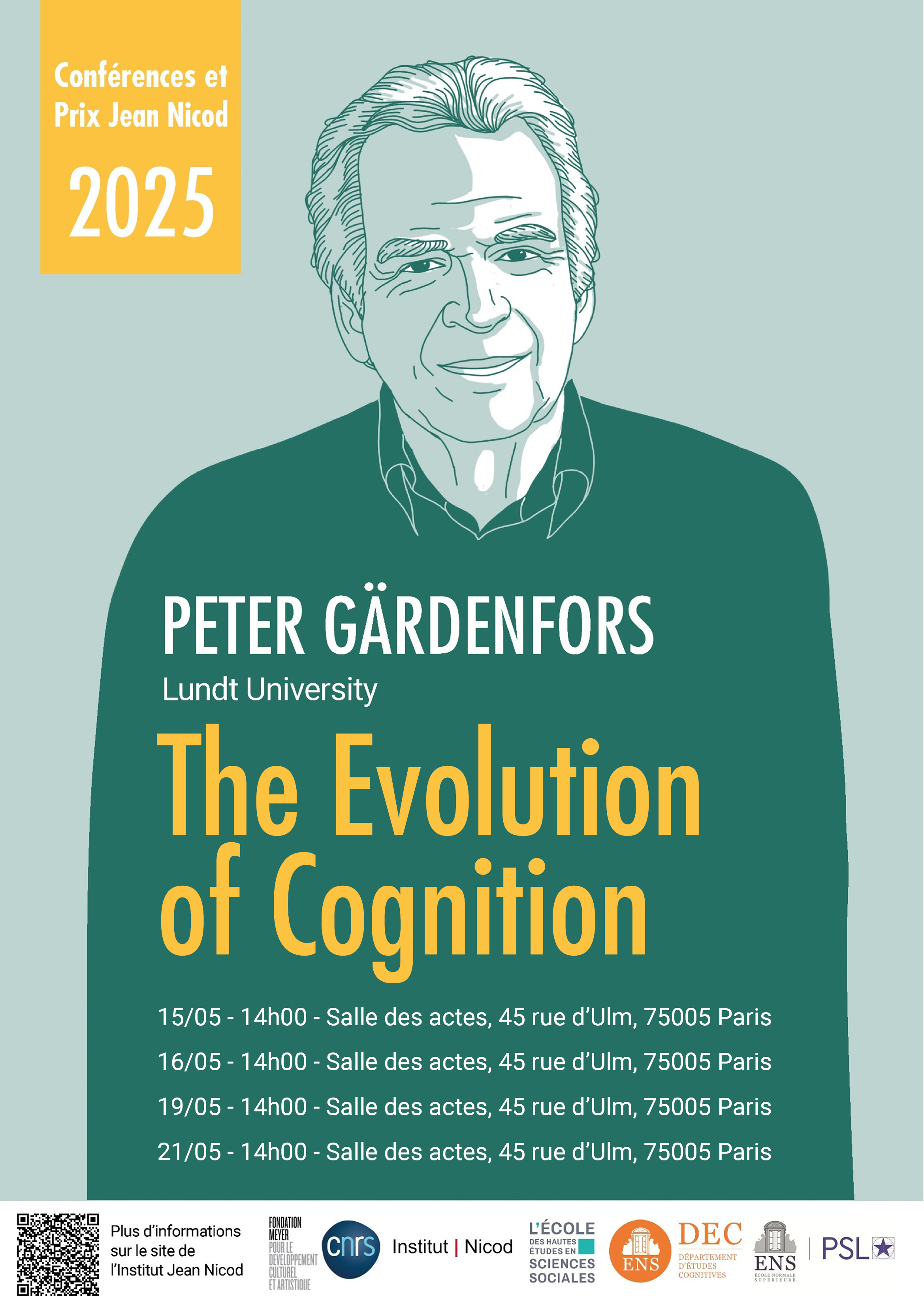
Prix Jean Nicod - Peter Gärdenfors: The Evolution of Cognition
Le Prix Jean Nicod 2025 est décerné à Peter Gärdenfors qui viendra présenter quatre conférences à l’ENS en mai 2025.
Après un doctorat en philosophie théorique à l'Université de Lund, Peter Gärdenfors est devenu professeur en philosophie théorique puis en sciences cognitives à l'Université de Lund. Il a également été professeur à l'Université de technologie de Sydney et, depuis 2019, il est chercheur au Palaeo-Research Institute de l'Université de Johannesburg.
Ses travaux de recherche portent principalement sur la formation de concepts à l'aide de modèles géométriques et topologiques d'espaces conceptuels, la sémantique cognitive, l'interaction homme-robot et l'évolution de la cognition humaine. Il est membre de la Royal Swedish Academy of Letters, History and Antiquities, de la Royal Swedish Academy of Science et de la Royal Swedish Academy of Engineering Sciences. Il a également été membre du comité du Prix Nobel d'économie.
Consulter le programme
Retrouvez les événements organisés par le DEC dans l'agenda du département.
Les séminaires et les conférences sont accessibles sur la chaîne youtube du département, le site des Savoirs de l'ENS, la chaîne youtube de l'école.
Retrouvez les événements de l'ENS sur https://www.ens.psl.eu.